
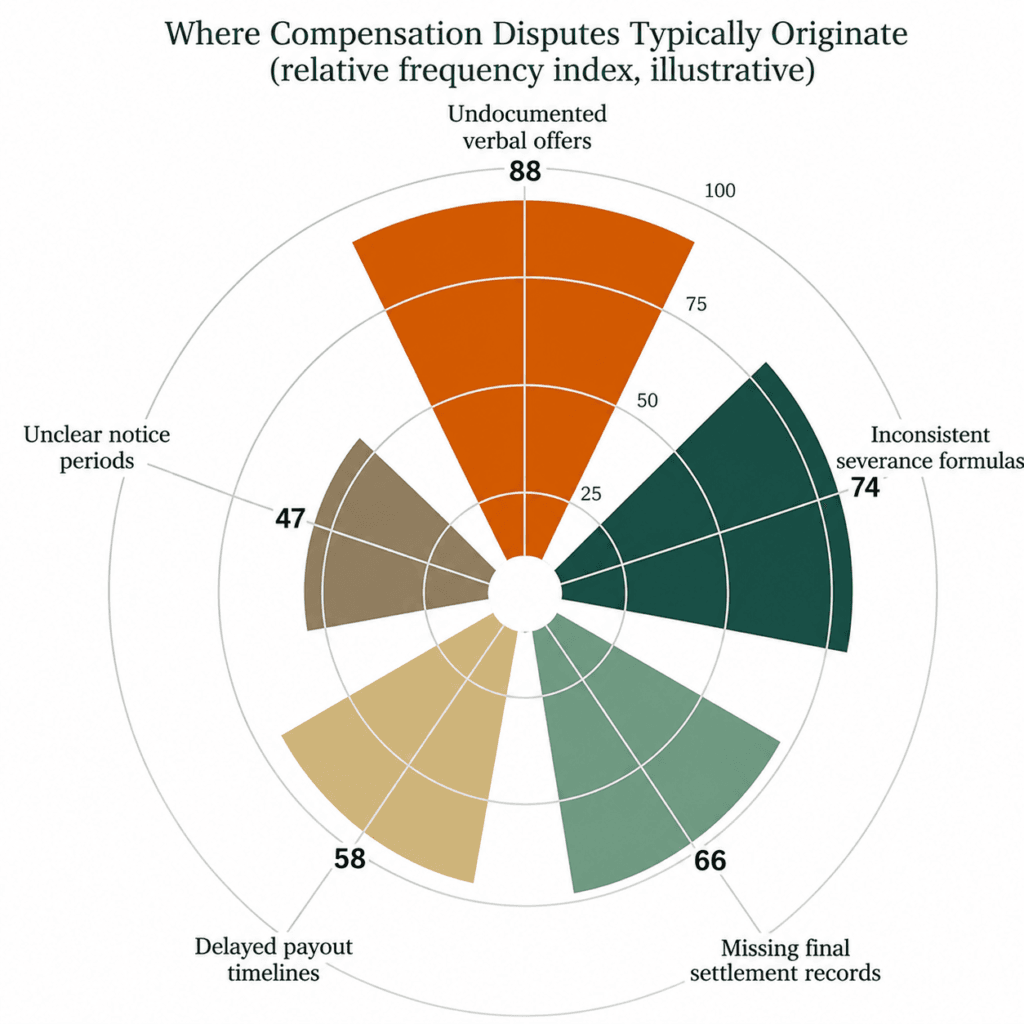
A hiring or exit process rarely breaks down over the numbers themselves; it breaks down over silence. Most compensation disputes trace back to one root cause: pay and severance terms that stayed vague until a moment when this practice became expensive. At Perpetum, we built our approach to salary and severance data around the opposite concept: document the terms clearly, explain severance before anyone signs and treat compliance as a talking point rather than fine print.
This shift toward documentation is measurable, not subjective. The share of U.S. job postings that include pay information has risen from roughly 15% before 2018 to about 53% since January 2024, driven by a wave of state-level pay transparency laws and, in Europe, by the EU’s Pay Transparency Directive.
What Transparency Means at Perpetum
For a workplace data partner, transparency has to go beyond a single headline figure. It means being clear about:
• How salary and severance data is recorded, stored and made accessible to the employee it belongs to
• How notice periods and severance eligibility work in each market we operate in
• What current EU and U.S. disclosure rules require right now
• What’s included in a compensation record, with no undocumented side agreements
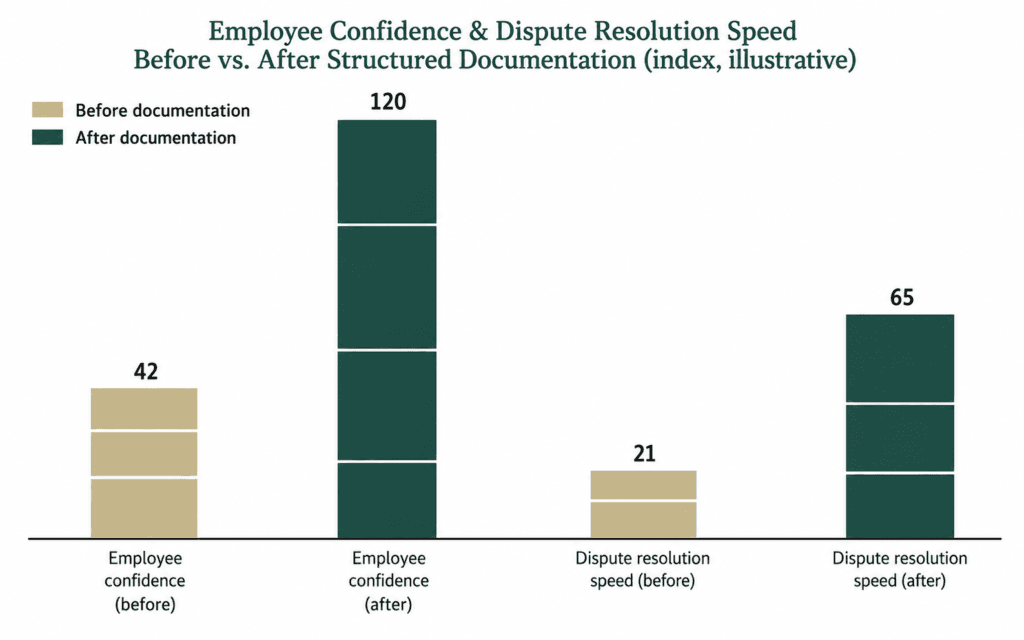
When these details are in writing from day one, disputes are resolved against a record rather than memory.
How Perpetum Documents Severance
A severance record outlines what happens if employment ends under specific conditions. It isn’t something most hires expect to use, but having it documented builds confidence long before it’s ever needed.
Formal severance policy adoption is rising across the market: benchmark studies show a majority of companies now maintain a written severance policy, up from prior years. Perpetum’s documentation approach reflects that shift. Every engagement includes:
• Clear notice period requirements for the applicable jurisdiction
• Defined severance eligibility and calculation method, recorded before signing
• A documented off-boarding process aligned with local labor law
• A recorded final settlement and property-return process
A clearly documented severance record doesn’t create fear; it shows that fairness and compliance hold even in the moments that don’t go as planned. That’s why severance terms are documented at the outset rather than surfacing as a surprise during an eventual exit.
Regulatory Landscape Every Employer Should Know
The compliance bar for pay and employment documentation keeps rising, and it isn’t limited to the United States. In the EU, the Pay Transparency Directive set a transposition deadline of 7 June 2026 for member states, a deadline only a handful of countries, including Slovakia, Italy, Lithuania and Malta, met on time, while others such as the Netherlands, Sweden and the Czech Republic have confirmed delayed implementation into 2027.
In the United States, at least 15 states plus Washington, D.C. now require some form of salary disclosure in hiring and the U.S. Department of Labor – Wage and Hour Division maintains recordkeeping obligations that make compensation records subject to review in a dispute. The U.S. Equal Employment Opportunity Commission relies on that same documented history to investigate pay discrimination claims.
For jurisdictions outside the EU and U.S., the Ministry of Labour and Employment, India sets standards around retrenchment compensation and termination notices and the International Labour Organization has published guidance showing that documented pay practices reduce disputes and build worker trust across markets.
For companies and employees navigating pay documentation, this generally means:
• Publishing meaningful salary ranges, not decorative ranges that satisfy the letter of a law without informing anyone
• Being prepared to disclose pay criteria and progression on request
• Reporting on gender pay gaps once headcount thresholds are met
• Documenting severance and notice terms clearly, in the language and law of the jurisdiction of employment
Why the Data Supports Openness
Recent research shows documented, transparent compensation practices improve hiring outcomes and workplace trust:
• Postings with pay information rose from an average of 15% before 2018 to about 53% since January 2024 in the U.S., with a further jump of roughly 20 percentage points in the month a new disclosure law takes effect.
• 82% of workers say they wish more employers disclosed wage and benefits information, yet compliance data shows roughly a quarter of postings covered by disclosure laws still omit salary information.
• 70% of survey respondents believe pay transparency reduces gender and ethnic pay gaps within organizations.
• 58% of workers say they would rather work for a company that publishes pay information openly.
• As of June 2026, just 4 of the EU’s 27 member states met the Pay Transparency Directive’s transposition deadline on time, underscoring how much documentation work is still ahead for most employers.
A caution worth repeating: publish real, narrow salary bands rather than decorative wide ranges that satisfy the letter of a disclosure law without actually informing anyone. A range so wide it could fit almost any role tells a candidate or employee almost nothing and it undercuts the trust that documentation is supposed to build.
How This Plays Out for Employees
Salary Records
Compensation components are documented in a structured, reviewable format rather than left as a verbal understanding.
Severance
Notice periods, eligibility and offboarding steps are recorded before a contract is signed, including any advance provisions required by local law.
Compliance
Documentation practices are kept aligned with EU Pay Transparency Directive requirements and the growing list of U.S. state disclosure laws, so employees and employers aren’t left to interpret overlapping rules on their own.
How Transparent Severance Policies Create Better Outcomes for Perpetum Clients
For the organizations Perpetum works with, documented severance practice isn’t just a compliance checkbox; it’s a business advantage. Clear, written severance terms give client companies a stronger position if a termination is ever challenged, because the agreement was set out and agreed to before the relationship began, not reconstructed from memory afterwards.
It also shortens the offboarding process itself. When notice periods, eligibility and settlement steps are already documented, HR and legal teams spend less time negotiating exits case by case and more time managing the business. And because the same documentation is aligned with EU and U.S. disclosure rules from the outset, clients face fewer surprises when regulations tighten or a new jurisdiction is added.
Perhaps most importantly, it protects an employer’s reputation. Companies that can point to a consistent, written severance practice, applied the same way for every employee, are better positioned to attract and retain talent in a labour market where 58% of workers say they’d rather work for an employer that’s open about pay and terms in the first place.
Conclusion
Salary discussions and severance terms shouldn’t be treated as uncomfortable topics or left until the final stages of an employment relationship. Documented, open communication helps organizations make better decisions while giving employees the confidence to plan with complete information and research shows this shows up in trust, retention and compliance outcomes, not just goodwill.
At Perpetum, we believe workplace trust begins with a documented record. By recording compensation clearly, explaining severance before anyone signs and staying aligned with EU and U.S. disclosure requirements, we help organizations and employees navigate compensation with confidence.
FAQs
1. Why does Perpetum document salary and severance details so thoroughly?
2. Does transparent documentation mean my salary is made public?
3. What happens to severance documentation when an engagement ends?
4. What do EU pay transparency rules require in 2026?
5. Does documentation actually reduce disputes, or just create paperwork?