
Hire in Ukraine
Ukraine has one of the largest IT talent pools in Eastern Europe – over 300,000 IT professionals. Despite the ongoing war, the tech sector has shown remarkable resilience. Talent is available both in-country and across diaspora hubs in Poland, Czech Republic, Germany, Spain and Portugal.

Country Snapshot
Field
Details
Capital
Kyiv
Currency
UAH (Ukrainian Hryvnia). IT salaries are typically USD or EUR denominated to hedge currency depreciation.
Status
Non-EU — EU candidate country. Local law applies. GDPR applies to your organisation as data controller.
Timezone
EET (UTC+2, no DST since 2022)
Tech Hub Cities
Kyiv, Lviv, Kharkiv, Dnipro — plus significant diaspora in Poland, Czech Republic, Germany, and Portugal
Why Hire in Ukraine?
Ukraine has one of the largest and deepest IT talent pools in Eastern Europe, with particular strength in engineering, data science, AI/ML, and cybersecurity. Ukrainian engineers are known for strong technical depth and extensive experience with international product companies.
Salaries are competitive – among the lowest in the region for comparable skill levels. Total employer cost is approximately 122% of gross salary. Salaries are typically USD or EUR denominated, protecting both the employer and employee from UAH depreciation.
Talent is available both in-country and across diaspora hubs in Poland, Czech Republic, Germany, and Portugal. Perpetum sources from both depending on client requirements and risk appetite. Diaspora placements reduce mobilisation risk while accessing the same talent pool.
Hiring Ukrainian talent requires specific attention to wartime legal modifications, mobilisation risk for male employees aged 18–60, and business continuity planning. Perpetum provides a full wartime risk briefing before any engagement and manages these considerations as part of the EOR service.
Employment Risk & Compliance
Contractor vs Employee Risk
MEDIUM – Ukraine has a large FOP (individual entrepreneur) IT market. Reclassification enforcement has been lower priority during wartime, but the State Tax Service has signalled increased focus. Single-client FOP relationships with fixed hours and employer control carry the greatest reclassification risk.
Backdating Warning
Contracts must be concluded before work commences. Registration with the Social Insurance Fund is required before the employment start date. Backdating is legally void.
Total Employment Cost
~122% of gross salary. Unified Social Contribution (UST): 22% employer-side. Income tax (PDFO): 18% employee-side. Military levy: 5% (increased from 1.5% under wartime law, October 2024 –
applies until end of martial law). Note: the military levy is an employee-side deduction but affects net take-home expectations.
Hiring Timeline
7–14 business days for Ukraine-resident employees. Diaspora employees may require coordination with host-country EOR entities. Verify employee location, martial law implications, and mobilisation status before onboarding.
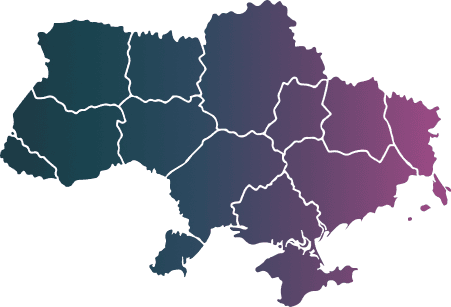
Main hub Cities
Kyiv
Lviv
Kharkiv
Dnipro
plus significant diaspora in Poland, Czech Republic, Germany, and Portugal
Salary Ranges - 10 Key Roles (2025–2026 Averages)
Base salary only – equity and bonuses additional. Last reviewed: June 2026.
Engineering Roles
Role
Mid (USD)
Mid (EUR)
Senior (USD)
Senior (EUR)
Tech Lead / CTO
$8,000
€7,280
$12,000
€10,920
Software Engineer
$3,500
€3,185
$5,750
€5,233
AI Engineer
$4,000
€3,640
$6,500
€5,915
Data / ML Engineer
$3,500
€3,185
$5,750
€5,233
DevOps / SRE
$3,000
€2,730
$5,000
€4,550
QA Engineer
$2,500
€2,275
$4,000
€3,640
Business & Operations Roles
Role
Mid (USD)
Mid (EUR)
Senior (USD)
Senior (EUR)
Application / MCP Support Engineer
$2,000
€1,820
$3,500
€3,185
Customer Success Manager
$2,000
€1,820
$3,500
€3,185
Digital Marketing
$1,500
€1,365
$2,500
€2,275
HR / Talent Acquisition
$1,500
€1,365
$2,500
€2,275
Finance / Accounting Mgr
$1,800
€1,638
$3,000
€2,730
*Minimum Wage: UAH 8,000/month (~EUR 185) as of January 2025. IT salaries are typically USD or EUR denominated and significantly above the statutory minimum.
Mandatory Benefits
- 24 calendar days annual leave minimum
- Sick leave: state-paid from day 1 via e-sick-leave system (60–100% based on tenure)
- Maternity leave: 70 days pre-birth + 56 days post-birth, state lump sum payment
- Parental leave: up to 3 years, partially state-paid, job-protected
- CRITICAL: Mobilised employees cannot be terminated and retain employment and seniority accrual throughout military service

Optional/ Market-Norm Benefits
- USD or EUR denominated salary - strong employee preference given UAH depreciation
- Private health insurance
- Relocation assistance (in-country or abroad)
- Generator / UPS / Starlink allowance - wartime practical necessity
- Psychological support / Employee Assistance Programme
- Retention bonus - critical during wartime
Working Hours, Holidays & Leave
Field
Details
Standard Hours
8h/day, 40h/week. Wartime modifications allow temporary extensions in critical sectors.
Overtime
Standard: max 4h OT over 2 consecutive days; 120h/year. +100% premium (double pay).
Night Work
22:00–06:00: 30-minute daily reduction or premium pay
Public Holidays
11 days per year
Statutory Leave Types
01
Annual leave: 24 calendar days minimum
02
Sick leave: state-paid from day 1 (60–100% based on tenure)
03
Maternity: 126–196 days, state-paid
04
Parental: up to child age 3
05
Military: full job protection and seniority accrual - CANNOT be terminated

Termination, probation & Notice
Notice Periods
Scenario
Notice Required
Employee resignation
2 weeks
Employer-initiated redundancy
2 months minimum
Disciplinary / for cause
No notice required, but full process required
*Probation period: Up to 3 months (6 months for management roles). Terminate with 3 days written notice during probation.
Severance
On redundancy or liquidation: minimum 1 month average salary. CRITICAL wartime rule: employer cannot terminate mobilised employees or those on maternity/parental leave (child under 3) unless the entire business is liquidated.
Grounds for Termination
Exhaustive Labour Code grounds required. CRITICAL wartime restriction: mobilized employees retain full employment protections and cannot be dismissed. Male employees of military age (18–60) face mobilisation risk - Perpetum provides continuity planning guidance before engagement. EOR must monitor martial law orders continuously.
EOR Risk Note
HIGH - Martial law remains in effect since February 2022. Male employees aged 18–60 are subject to military mobilisation - this is a live operational risk. Standard employment law applies in non-occupied territories, but enforcement is inconsistent and the regulatory environment can shift with little notice. Single-client contractor arrangements carry reclassification risk under Gig Economy Law No. 1618-IX introduced a simplified tax regime for IT contractors (single tax Group 3), but single-client dependencies remain a reclassification trigger.
IP, Compliance & Non-Compete
Topic
Summary
IP Ownership
Employer owns works created in scope of employment. Must be explicitly stated in the contract. Special attention required for employees with dual FOP + employment arrangements.
Non-Compete
Ukrainian Labour Code does not explicitly regulate post-employment non-competes. Non-solicitation clauses are more reliably enforceable than non-compete in practice.
Data Privacy
Not EU. Law on Personal Data Protection (2010, amended) applies. Ukraine has EU adequacy recognition for some purposes — verify per transfer scenario. Commissioner for Human Rights oversees data protection.
Labour Compliance
Labour inspectorate oversight. EOR must maintain compliant employment files, payslips, and timesheets. Wartime martial law orders may affect compliance requirements - monitor continuously.
*Confidentiality & NDA: Enforceable. Explicit provisions recommended in all employment contracts.
When EOR Is the Right Choice
Ukraine EOR requires a wartime risk conversation before engagement. Perpetum provides a full briefing on mobilisation risk and business continuity planning. For clients comfortable with the risk profile, Ukraine offers exceptional technical talent at highly competitive rates. Diaspora placements (Poland, Czech Republic, Germany, Spain, Portugal) reduce mobilisation risk while accessing the same talent pool.
*For larger teams or long-term commitments in Ukraine, discuss Build-Operate-Transfer or Turnkey Staff Augmentation with Perpetum.
FAQ
1. Is it safe to hire in Ukraine during the war?
It depends on your risk appetite and the role. The Ukrainian tech sector has shown remarkable resilience since February 2022. Diaspora placements (Ukraine-origin engineers based in Poland, Czech Republic, Germany) eliminate in-country risk entirely while accessing the same talent pool. Perpetum provides a full wartime risk briefing before any Ukraine engagement.
2. What is mobilisation risk and how does it affect hiring?
Male employees of military age (18–60) are subject to military mobilisation under Ukrainian martial law. A mobilised employee cannot be terminated and retains full employment protections. Perpetum’s pre-engagement briefing covers the employee’s mobilisation status, risk profile, and continuity planning options including diaspora alternatives.
3. What is the total employer cost in Ukraine?
Approximately 122% of gross salary. Employer-side Unified Social Contribution (UST) is 22%. The military levy (5%, increased under wartime law in October 2024) is an employee-side deduction but affects net pay expectations.
4. Are salaries paid in USD or UAH?
IT salaries are almost universally USD or EUR denominated in Ukraine — both in-country and diaspora. This protects both employer and employee from UAH exchange rate fluctuation. Payroll is processed in UAH at the current exchange rate.
5. Can Ukrainian employees work remotely from outside Ukraine?
Yes — many Ukrainian tech professionals are currently based in Poland, Czech Republic, Germany, Portugal, and other EU countries. Diaspora placements require coordination with local EOR entities in the host country. Perpetum manages this.
6. What happens if our employee is mobilised?
A mobilised employee cannot be terminated. They retain their employment contract, seniority, and all statutory benefits throughout their military service. Perpetum advises continuity planning — including backup resource arrangements — before any Ukraine engagement.
7. Can I hire Ukrainian diaspora employees based in Poland or Czech Republic?
Yes — and this is a common approach for clients who want access to Ukrainian talent without in-country risk. Diaspora employees are employed under Polish or Czech law respectively. Perpetum manages EOR in both markets.
8. Is Ukraine GDPR-compliant?
Ukraine has partial EU adequacy recognition. Data transfers require verification per transfer scenario. The Law on Personal Data Protection (2010, amended) applies domestically. Perpetum manages data transfer compliance as part of the EOR service.
9. What is the FOP model and when is it appropriate?
FOP (Fizychna Osoba Pidpryiemets) is Ukraine’s individual entrepreneur structure, similar to a sole trader. It is widely used in Ukrainian IT but carries reclassification risk for single-client engagements with employer-style control. EOR is the safer structure for ongoing engagements.
10. How long does EOR onboarding take?
7–14 business days for Ukraine-resident employees. Diaspora employees may require additional time depending on the host country. Mobilisation status verification adds to the pre-onboarding process.
11. Is it viable to hire tech talent in Ukraine in 2026, and how does Perpetum manage the wartime risk?
Ukraine retains one of the largest and most experienced IT talent pools in Eastern Europe – over 300,000 IT professionals – and many continue to work actively, either from within Ukraine or relocated across the EU. Perpetum approaches Ukraine hiring with a clear-eyed view of the operational context: we assess individual risk factors, work with talent where relocation has already occurred, and structure engagements with continuity planning in mind. The decision to hire from Ukraine is one Perpetum discusses openly on discovery calls so clients have a full picture before committing.
12. Can Ukrainian IT professionals hired through Perpetum be based in another country?
Yes. A significant proportion of Ukrainian IT professionals have relocated to EU countries – Poland, Germany, Czechia, Bulgaria, and others – since 2022. Perpetum can employ talent through EOR in the country where they are currently residing, provided that country is within Perpetum’s coverage footprint. This allows companies to access Ukrainian expertise while employing through a stable, low-risk jurisdiction with full local compliance.
Ready to hire in Ukraine?
Our team has been working the Ukrainan talent pool for years and is well familiar and acquinted with the market specifics.
Related Country Guides
Calculate hiring cost in Ukraine
This guide is informational and reflects conditions as of June 2026. Employment laws change frequently. Verify with qualified local counsel before making hiring decisions.
- Hiring Cost Calculator
Enter a net salary, select a country and service – we’ll show you the gross salary, total employer contributions, and the all-in monthly cost including Perpetum’s fee. Figures are based on 2026 statutory rates and updated quarterly.